
AST ESMTP: National collaborators share vision for the future
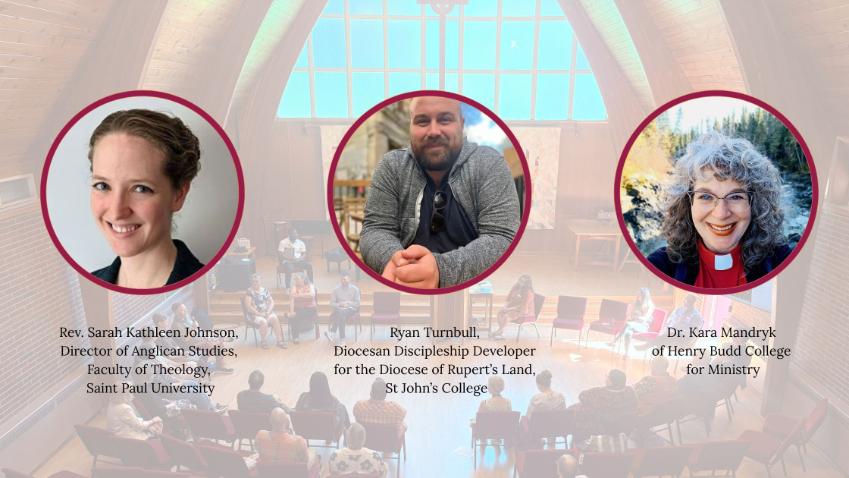
HALIFAX, N.S. – Following the announcement of a $2.5 million USD grant from Lilly Endowment’s Pathways for Tomorrow Initiative, Atlantic School of Theology (AST) is pleased to share insights from the national collaborators shaping the Ecumenical Shared Ministries Training Program (ESMTP).
This ambitious project unites theological schools and partners from coast to coast to coast, addressing the evolving needs of the Canadian Church through a lens of inclusive, transformative leadership.
AST is working with St John’s College in Winnipeg, the Prairie Centre for Ecumenism in Saskatoon, Saint Paul University in Ottawa, Henry Budd College for Ministry in The Pas, M.B., and the Canadian Council of Churches on a project that will develop curriculum and training for lay and ordained leaders in Ecumenical Shared Ministries.
The project is being funded through Lilly Endowment’s Pathways for Tomorrow Initiative. This initiative is designed to help theological schools across the United States and Canada as they prioritize and respond to the most pressing challenges they face as they prepare pastoral leaders for Christian congregations both now and into the future.
About Ecumenical Shared Ministry and ESMTP
In thousands of towns, cities, and rural communities in Canada, there are multiple Christian churches struggling with ageing membership, dwindling financial resources, and crumbling buildings. This reality has opened an incredible opportunity to revisit the call of Christ to unity.
In an Ecumenical Shared Ministry (ESM), people worship and serve God in a unified way while still maintaining their denominational identity and connections. An ESM is any combination of denominations sharing a program, mission, ministry, staffing, worship, and/or building.
ESMTP will provide resources to train and equip those preparing for ordained ministry, lay congregational leaders, and those who have served as pastoral leaders for some time in their own distinct traditions. It would allow the limited resources of each of the collaborating organizations to come together to be more than the sum of their parts, giving learners access to innovative scholarship, practical skills, and a network of practitioners and mentors to empower them to live into this vibrant model of local ministry.
Equipping Rural and Northern Leadership
For many communities, ecumenical cooperation is not a theory, but a necessity. Dr. Kara Mandryk of Henry Budd College for Ministry notes that in rural and northern settings, neighbours have been crossing denominational lines for decades to sustain worship and service.
“The work of ministry and worship is shared in many rural and northern communities because that’s what neighbours and relatives do,” says Mandryk. “This training program will equip and empower people to minister together with confidence, purpose, and generosity.”
Deep Roots in Collaborative Education
The ESMTP curriculum is built on a foundation of existing expertise. At Saint Paul University in Ottawa, the program aligns with a long-standing commitment to bridging traditions.
“Saint Paul University is excited to partner on this grant, which reflects our long history of theological education bridging different Christian traditions and our increasingly diverse student body,” shared Rev. Sarah Kathleen Johnson, Director of Anglican Studies, Faculty of Theology, Saint Paul University.
Similarly, St John’s College in Winnipeg brings years of experience in ecumenical partnerships to the table. Ryan Turnbull, Diocesan Discipleship Developer for the Diocese of Rupert’s Land, St John’s College, highlights that the mission of St John’s has long reached beyond its own tradition.
“While St John’s does indeed have deep roots in Anglicanism, our mission has been lived out for many years in ecumenical partnerships,” says Turnbull.
“From the days of the Winnipeg Theological Consortium to our current partnership with Canadian Mennonite University, theological education at St John’s has long sought to equip disciples far beyond our own tradition.”
Turnbull adds, “As the theological college of the Diocese of Rupert’s Land, we have also directly served a number of ecumenical shared ministries for many years and are very excited by the possibilities this grant will unlock to serve those communities, and our institutional partners, in a more robust way into the future.”
A Sustainable Vision for the Future
As local churches navigate complex transitions, the ESMTP aims to provide the guidance required for sustainability. Rev. Dr. Scott Sharman of the National Task Force on Ecumenical Shared Ministry believes this investment is critical for the vibrancy of the Gospel in Canada.
“Trends suggest that in the coming years, many local churches across Canada from coast to coast to coast will increasingly need to learn to embrace one another in ecumenical partnership if they are to have a vibrant and sustainable ministry presence in their communities into the future,” says Sharman.
“This substantial grant to support the development of an Ecumenical Shared Ministries Training Program will help to lay strong foundations for that common future, investing in the education and formation of ministry leaders who will have both the tangible skills and the spiritual vision they need to guide these exciting and complex transitions into new ways of being the Church and witnessing to the Gospel together for the life of the world.”