AST News
AST Welcomes Rev. Dr. Michael Droege as Director of the Diploma in Intergenerational Faith Formation
Published on: Thursday, July 9, 2026 at 5:47 PM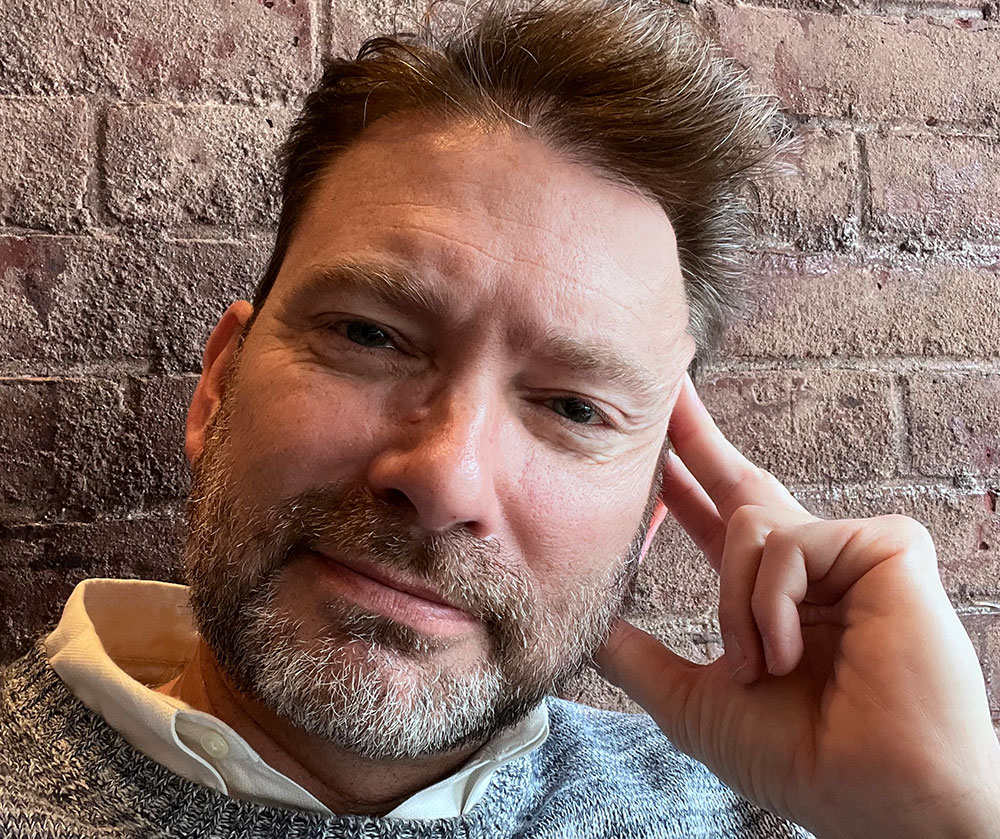
AST is pleased to announce that Rev. Dr. Michael Droege will be stepping into the role of Director of the Diploma in Intergenerational Faith Formation (DIFF) for the next two years while Dr. Dave Csinos is away on sabbatical and subsequent leave.
To help our students, faculty, and the broader public get to know him, we asked Michael about his background in practical theology, his first impressions of AST, and what inspires his leadership.
Welcome to the Atlantic School of Theology community, Michael. Can you tell us a bit about yourself and what brought you to AST?
I am so grateful to be a part of the AST community. I met Dr. Csinos in Westminster when we were attending an international summit on intergenerational ministry. It was wonderful to be with colleagues who were all thinking the same ideas. I have been blessed to develop a friendship with Dr. Csinos and was grateful to be available to cover this innovative program as AST in his absence.
Transitioning into a new leadership role is always an adventure. What has been your first impression of the AST community so far?
It is not only an adventure to transition into a new leadership role, but doing so remotely adds an additional layer of challenge. But I have experienced nothing but overwhelming support and clarity from faculty and administration, and having met a few of the students, I expect the same of the student body. It is thrilling to be in such a hospitable community with a passion for learning and ministry.
You have a background in ministry, theology, and community building. How has your past work and research shaped your perspective on theological education today?
I have always lived in the balance between research and practice as a two-way street. As a practical theologian, I take academics seriously, but if the academy is not in a position to listen to the lived faith of people in a wide diversity of contexts, then it remains static theory that does very little to bring life to either community. That philosophy is at the heart of how I approach intergenerational formation—it is a collaborative effort across the lifespan, not one generation depositing knowledge into the next. Theological education, at its best, is also a collaborative effort between professor and students in context, forming wisdom together.
For those in our community who might be less familiar, how do you define the core mission of the DIFF program?
As I see it, as one of the only programs centering intergenerational formation in the world, the DIFF program provides students with more than a program of religious education but a theological lens through which to view their entire course of study at AST. It’s a powerful and rich positioning.
What initially drew you to the DIFF program, and why do you feel it is so vital for AST right now?
The church is in a much-needed season of correction. The latter half of the 20th century demonstrated the limitations of age-isolated formation and the fracturing of community, and programs like the DIFF program are on the cutting edge of addressing this misalignment with theological wisdom and contextual attunement. This is where real change occurs.
As you take the reins, what are your immediate goals for the program, and do you have a long-term vision or dream you hope to realize?
I hope to honour the work of Dr. Dave Csinos, who has built something truly unique and meaningful while, in my short term at AST, contributing something of my own work. I hope that my contribution allows an expansion of the conversation already growing at AST into the next generation.
How can AST students, faculty, and the broader community best engage with or support the DIFF program under your leadership?
I invite all of us to learn together. As I am coming in as a bit of a blank slate, I get to build something with you. I invite anyone curious to reach out for conversation, take a course, or come to an event and see what the conversation is all about and the role you might play.
When you aren’t focused on theology and program coordination, how do you like to spend your down time?
My favourite thing to do is walk through the city or, if the weather is not cooperating, duck into a museum. As a New Yorker, I have lots of opportunity for art, jazz, nature, or just something out of the ordinary. I love to be present in my city.
What is one thing—a book, a hobby, or a fun fact—that the AST community might be surprised to learn about you?
I try to start every morning with coffee and fiction. I don’t start with theological or academic texts. We need to make sure we are staying connected to stories. Theology might be a way we can explain something, but stories are how we understand. I love slow stories like Richard Russo or Junot Diaz.