
AST News
Author & Alumna Jill MacLean on Writing Medieval Fiction, Faith, and Her Return to AST
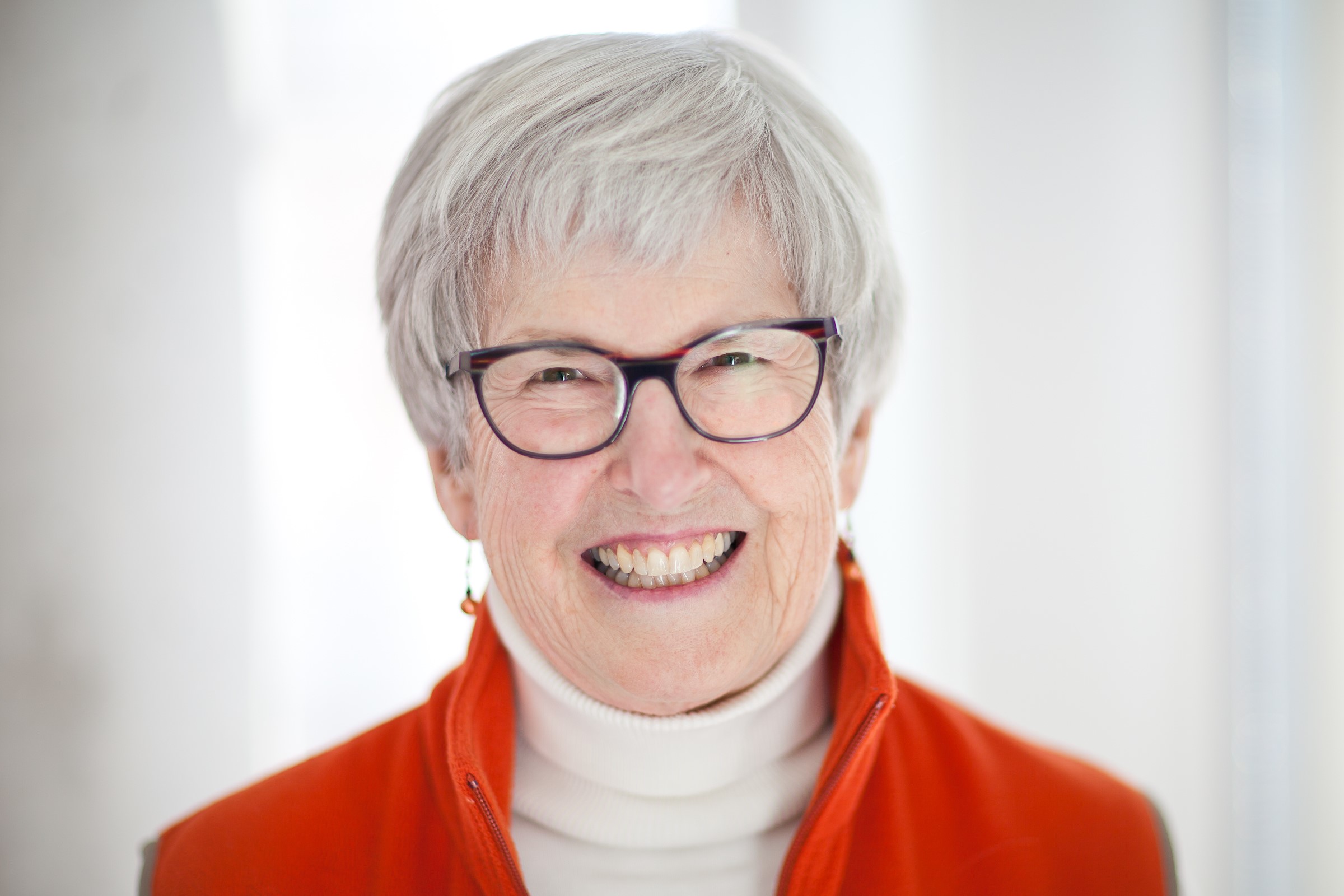
This Community Thursday (Nov. 12), we’re welcoming celebrated author and AST alumna (MTS 1996) Jill MacLean to the President’s Lodge.
Over the last two decades, Jill has built a fascinating literary career spanning multiple genres. She most recently completed a medieval novel trilogy.
Jill is the award-winning author of five contemporary books for young readers, including The Nine Lives of Travis Keating and Nix Minus One, as well as a collection of poetry, The Brevity of Red.
She earned her Master of Theological Studies (MTS) from AST in 1996 and recalled that her time here left a lasting mark on her creative and intellectual journey.
Ahead of her visit, we caught up with her to discuss her transition into historical fiction, how questions of faith and human resilience shape her characters, and what she’s most looking forward to as she reconnects with the AST community.
Congratulations on completing your medieval novel trilogy! What first drew you into historical fiction, and how does completing this trilogy feel alongside your YA poetry and prose?
When the last of my five novels for young readers was published in 2014, I felt very strongly that I was in danger of falling into a literary rut. Five novels, all contemporary, four of them taking place in northwestern Newfoundland, and four of them dealing overtly with bullying (obviously I was obsessed with that particular abuse of power).
I was done. But what next?
The frightening hiatus that followed is, I think, called writers’ block. Or, more charitably and possibly more accurately, a fallow period—rather like the fallow years imposed by serfs on their rotations of field crops. Add as much dung as you can, plow it in, and wait for the next season.
Gradually my longtime but rarely expressed fascination with the medieval period surfaced. I’d been fortunate enough to go to Chartres, that great stone pile, its floors lit by shards of red and blue, its stained glass windows telling biblical stories for illiterate worshippers. I’d visited the museum at Cluny and the Cloisters in New York, and on my several trips to England I’d sat in Norman churches, with their thick walls and narrow windows: dusty churches, echoing with the spirits of those who for over 800 years had brought their troubles, their joys, and their prayers to that space and offered them up.
The 1300s tugged at me from the beginning—the 14th century was the most tumultuous century of the Middle Ages, afflicted by famine, war, plague, and rebellion.
A year of intense research began, both in England and in my study. In search of the setting, my son drove me around the back lanes of southern Berkshire, the county where I was born, and on the banks of the River Kennet I found the rolling countryside that would welcome Flintbourne, my imaginary medieval village.
Dalhousie’s Killam Library has an extensive medieval collection, and I spent a year reading.
I was hooked. All I had to do now was write the book.
I still feel that my five books for young readers were a real accomplishment—quite apart from the fact that they won awards, and two of them are in the Nova Scotia school system.
At first I thought The Arrows of Mercy would also be YA and soon discovered I wanted to write novels without constrictions—novels that would be darker and, I hoped, deeper—novels for adults. A steep learning curve ensued, which plunged me back into my beginner’s mind. Disconcerting and exciting at the same time.
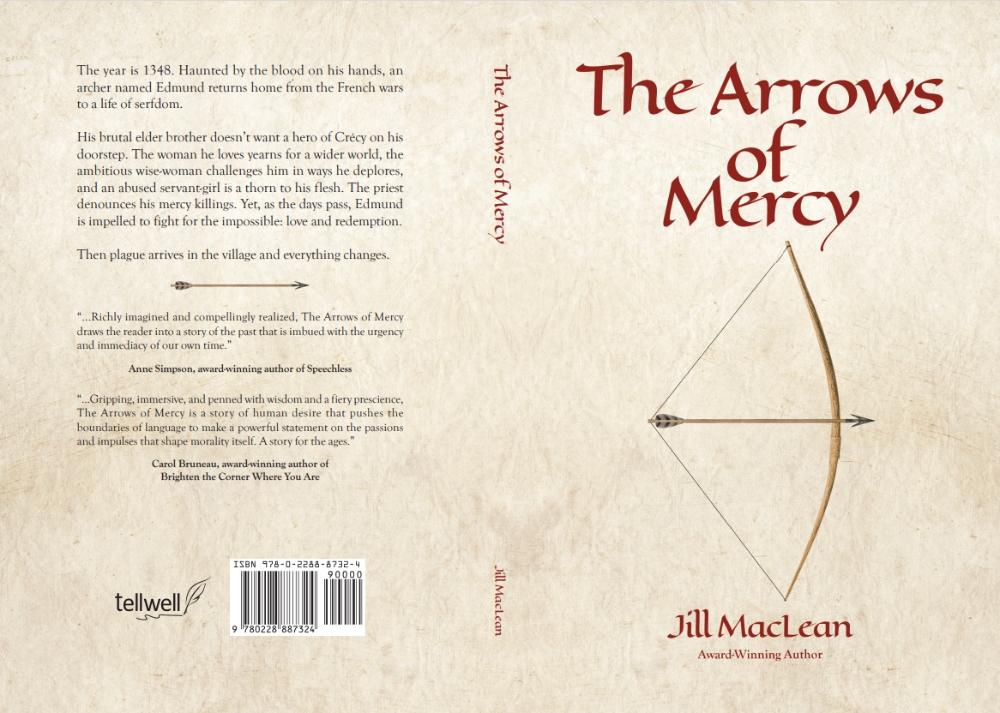
Three medieval novels have followed: The Arrows of Mercy (2023), The Arrows of Fealty (2025), and, to complete the trilogy, The Arrows of Exile (October 2027).
I’ve so enjoyed the research. I’ve met archers and horse archers and bowyers and medieval professors. I’ve had 14th-century poetry read to me in Middle English. I’ve visited a medieval village in Wales and walked the streets of the City of London with a guide who was an expert on the Great Revolt of 1381 … and now, what next? Am I done with the 14th century? Will there be another fallow period? I have no idea!
Writing across multiple genres (from YA verse to historical fiction) requires distinct creative muscles. How do questions of faith, ethics, or human resilience filter into the characters and stories you create?
Well, there’s a question!
Faith, first. I am not a believing Christian. But by plunging into the medieval period, I brought myself face-to-face with the Holy Church, powerful, hierarchical, and dogmatic, with a stance on sin and hellfire that filled me with discomfort. But—a major but—my characters were submerged in this church, in its bells and calls for prayer, its rituals, its demands, and its threats. And I, as a writer, had to do my best to fathom how warfare, plague, and rebellion, let alone the everyday stresses of serfdom, tested the beliefs of my characters.
The brutal warfare depicted in the first two medieval novels (part of what we now call the Hundred Years War) most certainly challenged the ethics and strained the beliefs of my protagonists—and caused me also to reflect on the prevalence of war in human history, so often motivated by greed and the lust for power. Are these attributes part of our genome? We are still waging war, the weapons more sophisticated, of course, but the basic impulses, it seems to me, are the same. I mentioned the prevalence of bullying in my novels for young readers. Bullying as warfare on the playground?
As for human resilience, not to mention redemption, it’s become very clear to me that I need to believe in both if I am to have any hope for us as individuals or for the future for humankind. Some of my characters are defeated by what happens to them; some are not.
I guess my overall answer to this difficult question is that I have no fixed answers. I simply hope the questions I pose, through my characters, are as relevant for you today as they would have been to Edmund, Haukyn, and Alyce in the 14th century.
You’re visiting AST this week (Thursday, November 12). What are you most looking forward to about re-connecting with the community during your visit?
I have many good memories from my six years at AST—it took me six years to complete the degree because I was also working half-time.
So many people who made up my community are no longer at AST or have died since then.
Dr. Shelley Finson introduced me, belatedly on my part, to feminism and liberation theology—and I suppose if my own world view has seeped into my medieval novels, which are about serfs, the lowest of the low, liberation theology could be the key.
Dr. Susan Slater was my thesis adviser—a thesis based on the last four chapters of the Book of Job, which contains some of the finest poetry of Hebrew scripture and which focuses on the idea of chaos as a legitimate part of God’s creation.
Leni Groeneveld, a former Pine Hill Director, was my next-door neighbour in the Hydrostones and a personal friend.
Dr. Alyda Faber some years ago invited me to a Thursday Community Lunch in connection with my free verse YA novel, Nix Minus One, in which 15-year-old Nix, after a death in his family, struggles with the twin scourges of grief and guilt. Alyda and I still manage to fit in the occasional tea break.
The many students who shared the classes I took—I regret I’ve lost touch with them.
Other than that, I can only say I’ll be delighted to share the lunch hour with some of those at AST today.