
AST News
Facing Truths, Building Solidarity: An AST Student Reflection
Published on: Tuesday, September 29, 2026 at 11:56 AM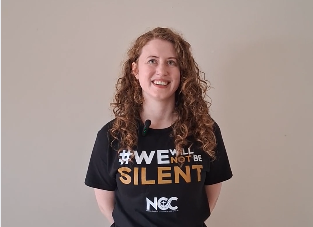
A reflection by AST student Sherry Brown
I've been thinking lately about the untapped power of religious gatherings.
Most of the time, privilege takes the form not of perks and benefits but of simply an absence of barriers, which is what makes imagining a better future for others and figuring out our role in making that future happen so difficult. We are so focused on our own barriers that it's nearly impossible to see the ones that do not exist for us; absence is less detectable than presence.
Therefore, true solidarity is doing the extra work of listening and watching and also experiencing barriers along with people. The Mi'kmaq people of Nova Scotia do not have the luxury of ignoring the barriers in front of them, and therefore neither do we. We must face painful truths and ask uncomfortable questions, and we must give up time and energy to fight against injustice. We must organize.
So many human rights movements have been bolstered by the church and by churches coming together to engage in collective advocacy. How can AST come together to make our voices heard and to amplify the voices of our Indigenous siblings? The church is a powerful force, and we do not have the luxury of wasting our potential to make change together.
This past August, Sherry Brown was selected as one of only 50 emerging Christian leaders from across the United States and Canada to participate in the North America–Turtle Island Regional Ecumenical Theological Institute (NATI-RETI). Held in Detroit and Toronto from August 3–16, this fully immersive residential program serves as the first North American expression of the World Council of Churches’ proven Global Ecumenical Theological Institute model. Guided by the theme "Where Now for Visible Justice?", Sherry and her peers engaged deeply with six critical pillars: solidarity with Indigenous communities, racism and anti-racism, secularism and laicity, wealth disparity and poverty, climate justice, and interfaith dialogue.