
AST News
Living, Practiced, and Embodied: Student Spotlight on Fallen Matthews
Published on: Friday, June 19, 2026 at 8:43 PM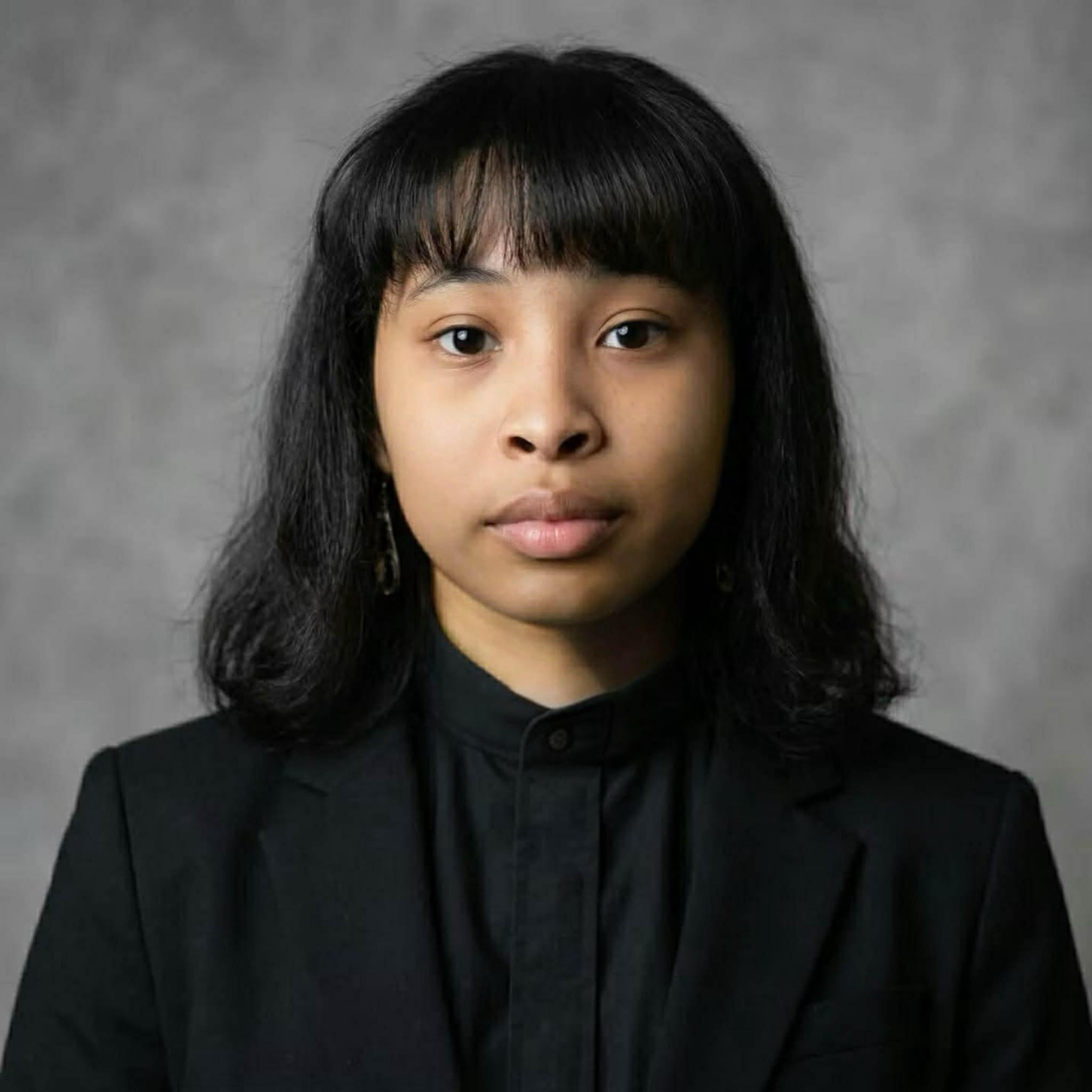
“My experience at AST has been welcoming, reflective, and intellectually enriching,” shares Master of Divinity student Fallen Matthews.
“What stands out to me is the sense that theological education here isn’t just about acquiring knowledge but about formation. The classroom becomes a place to think seriously about faith, community, worship, and responsibility.”
We sat down with Fallen to discuss her unique academic background, her upcoming book, and how these experiences shape her theological journey.
What drew you to the Master of Divinity program at Atlantic School of Theology (AST), and how has your experience been since enrolling this past March?
I was drawn to the Master of Divinity program at AST because I was seeking a space where theological formation could be intellectually serious and spiritually attentive. My background mostly involved studying difficult questions about ethics, suffering, temporality, media, technology, and human vulnerability, and I wanted to explore those questions not only academically but also vocationally and spiritually. My parish—St. Mark’s Anglican Church—have also been immensely supportive, guiding me throughout my lay minister training in addition to electing me to parish council and as a synod representative.
My path to theological study has also been shaped by difficult experiences in academia, including institutional failures of care, accountability, and oversight. Those experiences made me more attentive to the ethical responsibilities of institutions and to the cost of environments where people are treated as expendable. In that respect, AST offered me a different kind of space where I could think seriously about vocation, care, justice, and formation—not only as abstract ideas, but as lived commitments.
Since enrolling this past March, my experience has been meaningful and grounding. I’ve appreciated the opportunity to study in a community where theology is approached as something lived, practiced, questioned, and embodied. AST has given me space to think more deeply about worship, vocation, pastoral care, and the relationship between scholarship and service. For me, service means not only reflecting on history, justice, and community, but also seeking ways to carry those commitments forward in practice.
Your background spans a fascinating intersection of theology, AI, media, and interdisciplinary research. How do these diverse fields inform your current theological studies?
My interdisciplinary background helps me approach theology as a field that’s always in conversation with culture, technology, narrative, and lived experience. My work with technologies and representations really clued me into how people search for meaning, construct identity, imagine futures, and respond to loss or uncertainty.
In my own studies, I’m interested in questions of ethics, embodiment, temporality, and care. Theology gives me a language for thinking about human dignity, responsibility, grief, hope, and community in ways that exceed purely empirical or cultural analysis. At the same time, my work helps me ask how contemporary forms of storytelling and knowledge production influence us morally and spiritually.
Can you give us a small glimpse into your upcoming book with Bloomsbury Publishing? How does it connect to the themes of ethics, temporality, or religious experience?
My upcoming book with Bloomsbury—Temporal Resistance: Deleuze and the Unmaking of Colonial Narratives in Education—explores questions of time, ethics, pedagogy, and human experience in terms of interdisciplinarity. Gilles Deleuze’s ideas about difference, repetition, and becoming give me an effective and unique frame to critically consider how people continue to make meaning when aspects of life as we know it don’t ensue linearly. Although the project is not focused on theology, it connects strongly to theological questions in asking how (fellow) marginalized positionalities make and glean meanings of time as colonialism and loss irrevocably inform our understandings of past, present, and future. So, this engages themes also central to religious experience like longing, endurance, ethical responsibility, memory, and the search for meaning.
As a writer and educator with deep roots in Indigenous and Black studies, how do you see these perspectives shaping the future of theological research and education?
I approach Indigenous and Black studies with deep respect, but not with romanticism. These fields offer indispensable ways of thinking about land, memory, survival, justice, corporeality, and community. At the same time, they’re not exempt from broader problems of the academy like tokenism, performativity, neoliberalism, gatekeeping, and failures of accountability.
My own experiences made me wary of assuming that representation alone guarantees justice. These discourses matter for the future of theological research and education as they challenge theology to move beyond symbolic inclusion toward deeper ethical transformation. The question is not only just whose voices are represented; it’s about whether institutions are willing to practice repair, humility, responsibility, and care in material ways.
Indigenous and Black studies can help theology become more historically honest and more accountable, but only if they’re engaged as living ethical commitments rather than as institutional branding or predominantly performative personnel. They also invite deeper reflection on care, liberation, kinship, repair, and responsibility.
What are you finding most grounding or inspiring in your quiet moments of study and reflection lately?
Lately, I’ve been grounded by small, quiet practices that make study feel connected to life instead of separate from it. Prayer, reading, reflection, and even ordinary rhythms of care are important to me. I’m inspired by the idea that theological study doesn’t always come as certainty. Sometimes, it comes as being attentive, learning how to listen, stay open, and ask better questions.
I’ve also been reflecting on worship as something that forms us over time, so I find inspiration in the everyday moments where faith becomes practice, such as reading carefully, sitting with difficult questions, caring for others, and trying to remain receptive to God’s presence.
How has your experience at AST been so far? Is there a particular moment, class, or community connection that has stood out to you?
My experience at AST has been welcoming, reflective, and intellectually enriching. What stands out to me is the sense that theological education here isn’t just about acquiring knowledge but about formation. The classroom becomes a place to think seriously about faith, community, worship, and responsibility.
One meaningful part of the experience so far has been engaging with courses and conversations that invite me to connect theological ideas with my own life, research, and vocational questions. I appreciate being in a learning environment where scholarship and service can be held together, wherein people actually do things, not just pay lip service in terms of social justice and community. This integrity and action are important to me regarding my own principles as I continue discerning where my academic, creative, and theological work may lead.
I’m also at a point in my vocational and professional life where I am seeking, and deeply open to, steady work that would allow me to contribute my teaching, research, writing, and community commitments in a more sustained and meaningful way.