
AST News
The Uncontrollable Spirit: A Q&A with Rev. Dr. Rob Fennell on His New Book
Published on: Friday, June 19, 2026 at 8:09 PM
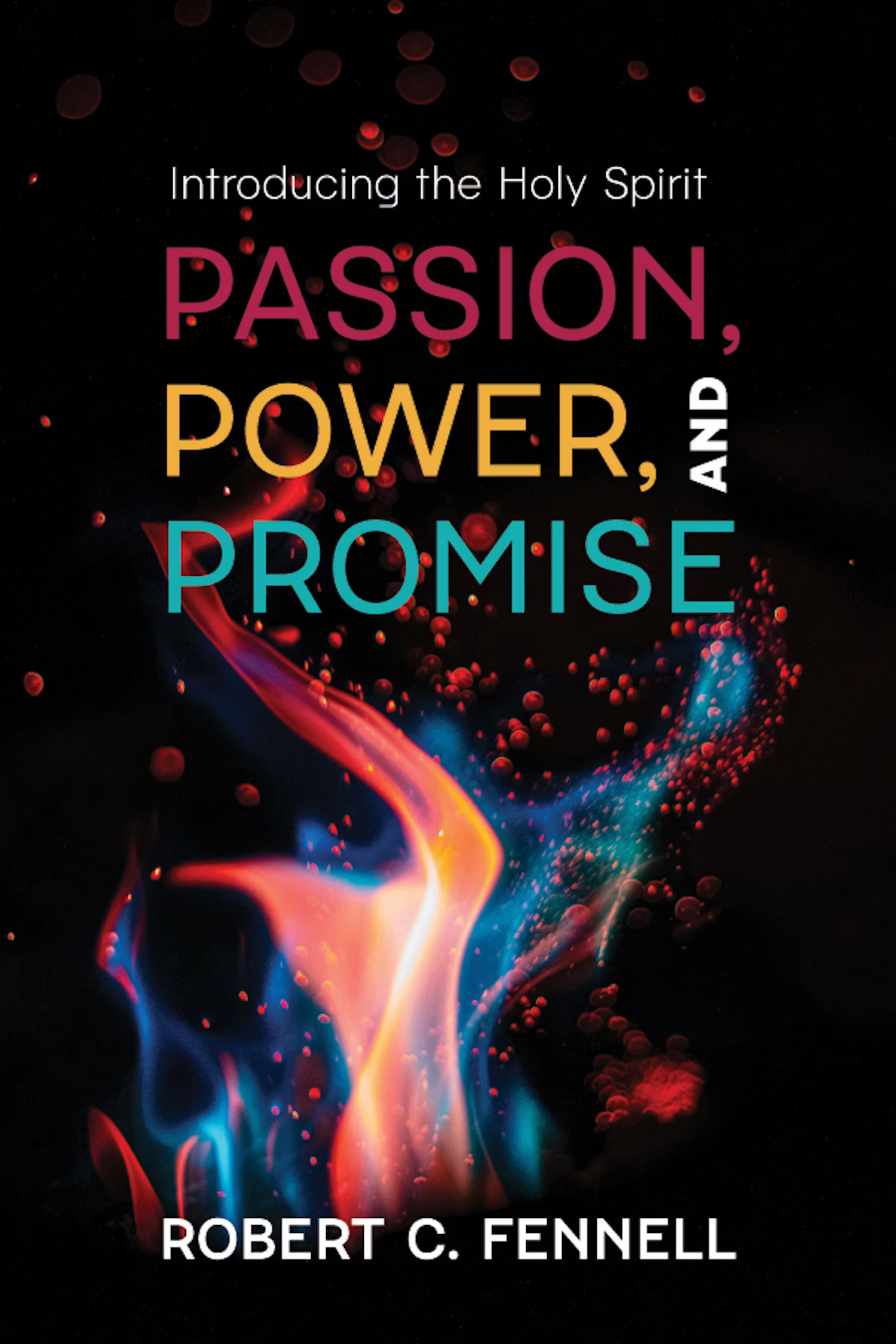
What if the Holy Spirit is much more surprising—and much less controllable—than we think? In his latest book, Passion, Power, and Promise: Introducing the Holy Spirit, AST faculty member (Professor of Historical and Systematic Theology) Rev. Dr. Rob Fennell takes readers on a sweeping journey through ancient Christian history, global church perspectives, and the crying need for ecological healing.
Designed for both solo readers and small discussion groups, the book challenges modern readers to look backward in time and outward across the globe to rediscover the true promise of the Spirit.
We sat down with Dr. Fennell to discuss ancient battles, global insights, and why the Spirit is calling us to fundamentally change how we relate to the Earth.
 Your book explores the Holy Spirit from a global perspective. What is one insight about the Spirit from the global Church that you think “northern” readers most need to hear right now?
The Holy Spirit is much more uncontrollable than we think. There are so many stories of surprise and blessing that emerge in contexts where people don’t try to tell the Spirit whom to be or what to do!
You give special attention to ancient Christian sources and the Reformers. Why is it important for us to look so far backward to understand the ‘Promise’ of the Spirit today?
It is the thinkers of the ancient Church who first helped the Jesus movement to figure out what the Holy Spirit is all about. The ‘battles’ they waged reveal a lot of theological truth that can still help us. The same is true of the era of the Reformers.
What do the United and Uniting Churches specifically bring to our understanding of the Holy Spirit’s identity that might be different from other traditions?
The United and Uniting Churches don’t claim to be novel and distinct in that sense. What they bring is a commitment to ecumenical, shared understandings and common mission. The Holy Spirit has a global purpose, and the United-Uniting traditions highlight this.
You speak about the Spirit longing for the transformation of not just people, but the whole creation. How does this study challenge us to rethink our relationship with the environment?
Above all, I think we can learn to befriend and love creation, not just use its resources. It is through the Spirit that all creation comes to life, including us—we are creatures too. Through the Holy Spirit’s power, we can find the new relationship with the Earth that is so desperately needed at this time.
The book is designed for both individuals and groups. What is one thing you hope a small group discovers together after they finish the final chapter?
My hope is that readers will find a deeper sense of who the Holy Spirit is and what the Holy Spirit is up to in the world and in the Church. The Spirit isn’t ‘out there, somehow,’ vaguely smooshing around. The Spirit has purpose and direction, and we are blessed to be drawn into that purpose for the sake of all.