
AST News
Steering Toward the Storm: How AST Shapes the Mindset of Ministry
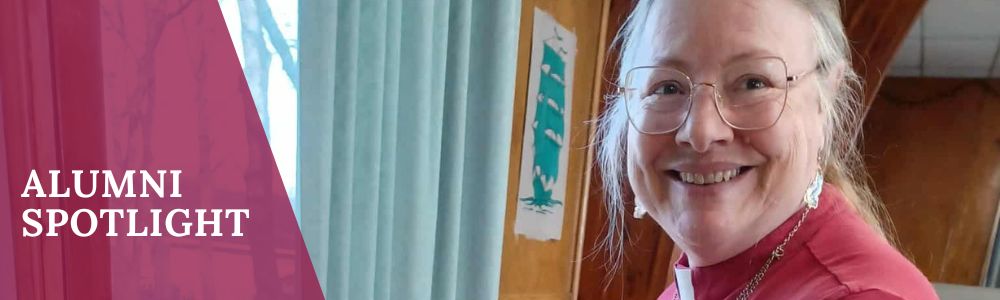
In this insightful alumni spotlight, Rev. Michelle Bull reflects on her journey through the Master of Divinity program at Atlantic School of Theology. From the intensive lessons of Clinical Pastoral Education to the deep bonds formed in ecumenical formation classes, Michelle shares how AST shaped her “mindset of ministry.” Now navigating the challenges of retirement and long Covid, she offers a powerful reminder to the next generation of leaders: that the heart of all ministry is a simple, prayerful commitment to “love the people.”
What did you study at AST, and how did you come to study here?
I did an MDiv at AST. I felt a call to ministry about the time we moved to Halifax for my husband to be Rector of St. Margaret of Scotland. The options were AST or be separated for three years, so I chose AST. I might well have chosen to come here anyway, because it's an excellent school and I particularly like its ecumenical nature. However, location was the biggest factor for me.
What is the most enduring memory or key takeaway from your time as a student at Atlantic School of Theology (AST)?
That's a very difficult question. Probably the most valuable course I took was the CPE (Clinical Pastoral Education), because it prepared me for pastoral ministry in a very intensive way. I found it so helpful that I took another unit, even though I didn't get credit for it towards my degree. I took quite a few other pastoral courses as well, and one thing that I have always remembered is Jody Clarke saying, “Steer towards the storm.” In other words, don't avoid the difficult issues, but move towards them. That was very helpful. And these courses gave us the skills to do that.
I also found the formation class particularly helpful. We met every week for about three hours and became quite close to each other, besides learning a lot about priestly ministry. Some of it was theoretical, like what does it mean to be a priest? Some of it was practical, like how to run a wedding rehearsal or celebrate the Eucharist. But it was all very formative and helpful.
I also really appreciated the opportunity to get to know people from other traditions, especially the United Church and the Roman Catholic. It was good to work with them and learn from them about how their denominations understand things. I formed close friendships with many of my fellow students, and those have carried on. That was a very key “takeaway”: good friends.
The faculty truth or dare during Welcome Week was also pretty memorable.
How did your theological education at AST uniquely prepare you for the challenges and rewards of serving in ministry?
It was very well-rounded. We had biblical studies, theology, pastoral care, preaching, how to lead worship, church history, and even a tiny bit of administration. Every class I took was aimed at making us better clergy, even things like Greek. I liked that emphasis, and I came away feeling prepared, and indeed, I was pretty well-prepared. Until Covid happened, but that’s another story.
Perhaps even more importantly, I believe we learned quite a bit about what it means to be clergy, to live into the role. We got to practise in our field placements, and we got to debrief it, among ourselves and with the faculty, many of whom were clergy. It is not just learning skills. It’s about absorbing a whole mindset or attitude. When we graduated, we were more or less prepared to receive the grace of God at ordination and to begin to grow into priestly ministry or whatever it was that we were called to.
If you could share one piece of practical advice with a current AST student preparing for their first placement or ministry role, what would it be?
Love the people. It’s good to learn skills and so on, but if you don’t love the people, you won't be a good clergy person. And if you do love them, that will go a long way towards being a good minister. And by the way, some of them are hard to love, and it is only by the grace of God that we can do this consistently and constantly and deeply enough, so we need to pray for this grace all the time, every day. There is nothing more important than loving the people.
And the other thing is that where God calls, God empowers. We don't have to do any of this on our own. Indeed, we can't. So keep an active prayer life.
What is a current trend or new initiative in your ministry that you are most excited about?
I am currently retired, largely due to the effects of long Covid. So for me, it's trying to figure out what it is that I can still do and how I can do it. And honestly, the thing I look forward to most and that gives me the most joy is when I get the opportunity to preach and celebrate the Eucharist. And when I am able to give pastoral care to people, usually quite informally. That is also very life-giving.
As an alumnus, why do you feel it is important to stay connected to the AST community?
There are two things that I find most valuable in this, though I've been finding them a bit difficult lately because of the state of my health. One is that it is important to keep learning. When we graduate, we don't know it all! We know enough to get started, so it's important to keep learning, and AST offers a lot of excellent Con Ed opportunities and public lectures.
And secondly, ministry is hard. It's a lot of work, and it is challenging. It challenges us past what we can currently do, forcing us to keep growing. And I have found that we need the support of colleagues for that. We need to be there for each other. We need others who understand. And one can find that in the AST community.