
AST News
Turning Toward the Call: Natasha Bejarano’s Path to Convocation
Published on: Thursday, April 16, 2026 at 5:17 PM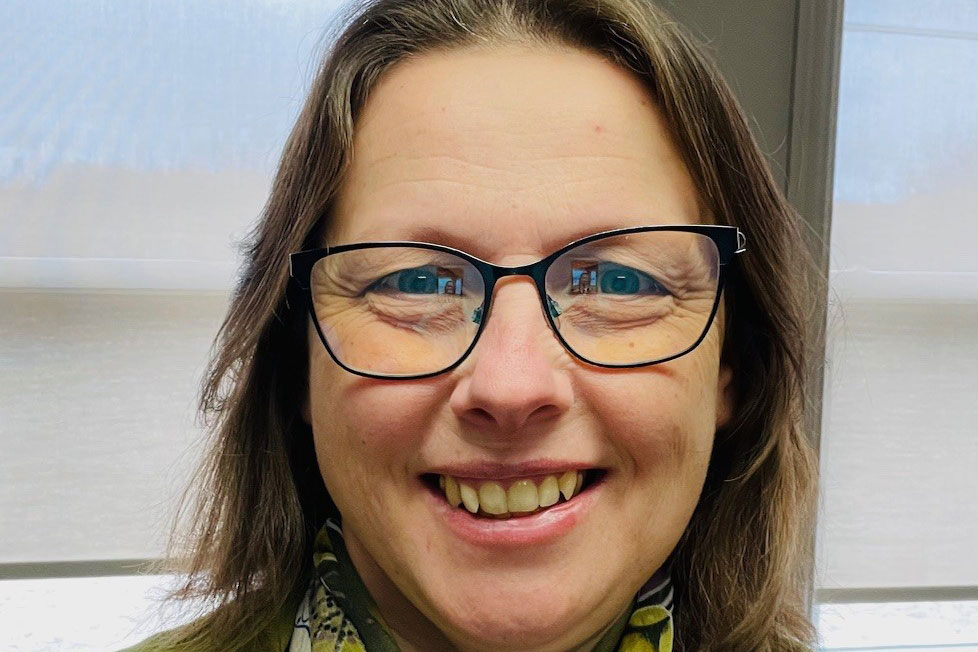
For Truro-based Natasha Bejarano, balancing a full-time government career with academic pursuit has been a journey of faith and persistence. Having navigated a major health crisis in late 2024 alongside the demands of her program, she is now preparing to cross the stage at the Cathedral Church of All Saints in Halifax on May 9.
Bejarano, who has completed her Graduate Certificate in Theological Studies (GCTS) at AST, credits her supportive family and a deep sense of calling for seeing her through the most challenging chapters of her studies.
“God planted the spark a long time ago when God called me to ordained ministry,” shared Bejarano. “It just took me a very long time to turn towards the call.”
That turn eventually led her to the Anglican Church’s Community of Associate Parish Priests—a discovery that made all the pieces fall into place. We caught up with Bejarano ahead of Convocation to discuss her path to ministry and what comes next.
How did your studies in ethics or systematic theology overlap with your professional work in the public sector? Did you find your perspective on your daily work shifting as you moved through the program?
What I found is that in many cases, when someone at work asked me what I was studying and I would answer with "theological studies," they would be in awe. So, being open about what I was doing seemed to open the door for more conversation around spiritual matters. I’ve worked many years in the secular space, and this is the first time I’ve encountered that openness. I think I made it safe for them in some way; perhaps I am wrong, but it just felt like people at work were willing to go a little deeper with me once they knew my educational and vocational pursuits.
As an entirely online student living in Truro, how did you manage to create a sacred space for study amidst the routines of home and work life?
How did I manage? Well, we have an office at home, so I had a physical space to be in for classes, studying, and doing assignments. This space also has my prayer corner, which consists of a prayer desk (kneeler) surrounded by saint icons, my plethora of prayer books and Bibles, and a crucifix, so there were many times I would roll my office chair up to that little corner and have much-needed sacred time.
The GCTS often serves as a time of discernment. Was there a specific course that completely changed how you view your faith or the world around you?
That’s a tough one. I loved all my courses. I think every course I took brought a lot of "wow" moments, and I am grateful to all my professors for sharing their knowledge and inspiring those “wow” moments. I just love learning about all this theological “stuff!” Most recently, the course that stands out for me and I think should be a prerequisite in these troubled times is Dr. Fennell’s course on Christian Nationalism. Great course and so very relevant. Another one that I think should be required is Dr. Clarke's course on Dying, Death, and Grief. Then again, I recommend all the courses; learning is great!
You talked about this a little at the Agape Service. People often wonder if you can feel connected while studying remotely. How did you find the experience of engaging with faculty and fellow students from your home in Truro?
At first a little rough. You see, at first, I was trying to pick asynchronous courses so it wouldn’t interfere with my work time, so for those first couple of courses, I really had no connection with students and limited connection with professors. But thanks to the support of my manager, I was able to take hybrid courses that were during the day, and that was a game changer in terms of feeling connected to folks. I got to see fellow students in real time and have little discussions, laugh at their jokes, and say thanks for their great insights or probing questions, and as I moved through courses, I got to see familiar faces; this too helped nurture the feeling of connection.
Balancing 10 credits with a 12-year-old and a full-time job is no small feat. How did your wife and child support your journey, and what did it mean to them to see you pursuing this academic goal?
I am very blessed to have such a supportive family. You’re right, it wasn’t easy balancing family, full-time work, study, AND all the church stuff that is also part of my formation. So, there were sacrifices. My spouse had to take on the brunt of the household duties; my daughter often complained that I was always busy or doing homework, and I know she missed me. My spouse also felt my distance as I was being busy with all the stuff. To take courses during the day, I had to work out an arrangement with my manager to work overtime hours, which was more time away from my family. I will admit there was one period that I did burn out and needed a bit of stress leave, but luckily that was at the end of a semester, so I didn’t miss any school! On top of that, a few months following the burnout I also had a major health crisis towards the end of 2024 during my period of study. I spent two weeks in the hospital and was told by the doctors that I was lucky to be alive; it could have gone a whole other way. So, this journey was not without its bumps and bruises, so to speak. Yet, despite the sacrifices I’ve had to make and my spouse and daughter have had to endure, they always tell me how proud they are of me and that they support me. Like I said, I’m so very blessed.
The GCTS parallels the first year of a graduate degree. Has this year of study clarified a next step for you, whether that is further academic work at AST or a new way of being present in your community?
One of the beauties of the GCTS program is that it does leave the door open for more. I don’t think I’m done with AST. I think I’m just done for now. I do truly feel I am called to the ministry of associate priest, but I also feel that this call is for something more when the time is right.
What would you say to another professional who feels called to study theology but is worried they are too busy to fit it into their life?
I would tell them that it is possible. I started this program in the winter of 2022 and for the most part took it one course at a time. I would tell them to expect sacrifice but that those sacrifices aren’t permanent. I would also tell them that it’s important to look after their physical, mental, and emotional well-being during the busy times. I would tell them that this kind of study is well worth the work and the time because the study of theology enriches your life on all levels.